A life in Iranian music, shaped by study, performance, and teaching
I began studying the setar in 1996. Since then, performance, teaching, ensemble work, and university study have formed one continuous musical path.
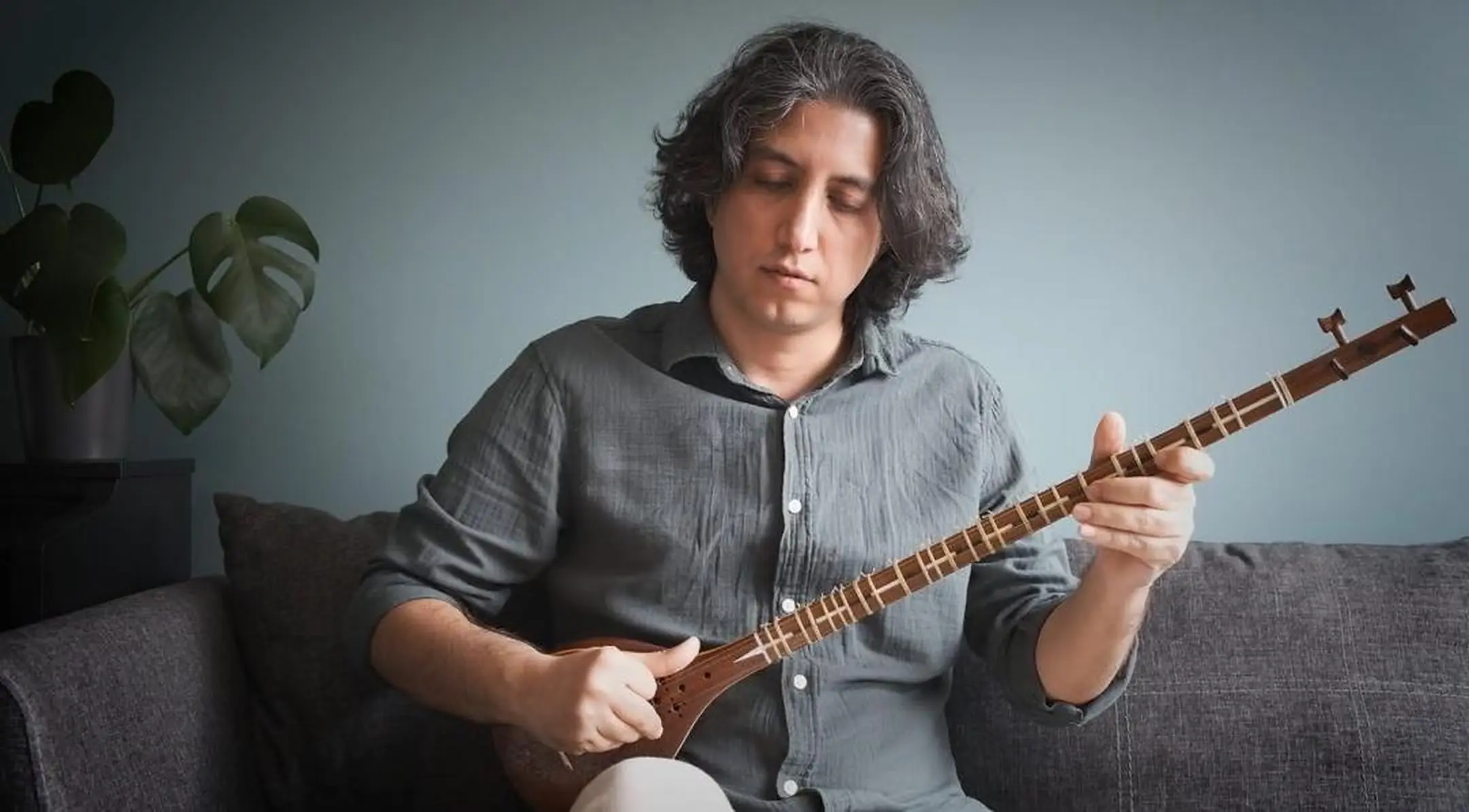
The setar is my principal instrument; I also play the tar as part of my broader musical practice.
I began studying Iranian classical music on the setar in 1996. The setar has remained my principal instrument, while the tar has also formed part of my practice. My work has centred on the radif, improvisation, phrasing, teaching, and ensemble performance.
In 2000, I began studying the Iranian radif and classical repertoire with Massoud Shaari. This period continued for approximately ten years and included many performances with the Hamsaz Ensemble in Tehran and other Iranian cities.
In 2005, following Mohammad-Reza Lotfi's return to Iran and the opening of his classes at the Mirza Abdollah School, I joined his specialised class. Over approximately six years, I studied the complete radif and the classical Iranian repertoire with him.
I also attended shorter periods of study with Hossein Alizadeh, Dariush Talai, Keyvan Saket, and Behdad Babaii. Around 2006–2007, I studied with Dariush Pirniakan for two to three months. Later, during my university studies, I continued working with him for about two years and studied several dastgahs from Ali-Akbar Shahnazi's advanced radif.
In 2019, I began the M.A. programme in Iranian Music Performance at the University of Art. During this period, I benefited particularly from the teaching of Mohammad-Ali Kiani-Nejad, as well as Houman Asadi, Babak Khazraii, Sasan Fatemi, Reza Parvizzadeh, and other members of the faculty.
My performance experience also includes many concerts with the Mahtab Ensemble, including appearances at the Fajr Music Festival, as well as performing on the setar with the Tehran Symphony Orchestra.
I founded the Saba Setar Ensemble, which performed concerts in Tehran and several other Iranian cities. Dar Baharan was one outcome of the ensemble’s work. I have taught for more than twenty years and founded and directed Sarang Music School in Tehran for approximately five years. In addition to teaching, I organised classes and workshops and hosted courses led by invited teachers.
A brief chronology
- 1996
Began studying the setar
The beginning of my long-term engagement with Iranian classical music and the radif.
- 2000
Began studying with Massoud Shaari
Approximately ten years of work on the radif and repertoire, alongside performances with the Hamsaz Ensemble.
- 2005
Joined Mohammad-Reza Lotfi's specialised class
Approximately six years at the Mirza Abdollah School, studying the complete radif and Iranian classical repertoire.
- 2007
Second Prize in setar performance
Iran National Festival of Young Music.
- 2011
Ghoroub / Sunset released
An album by Massoud Shaari, performed with the Hamsaz Ensemble.
- 2019
Entered the University of Art
M.A. study in Iranian Music Performance and continued work with university teachers and performers.
- 2021
M.A. completed and Dar Baharan released
M.A. in Iranian Music Performance and publication of Dar Baharan, one outcome of the Saba Setar Ensemble’s work.
Musical formation
The duration and nature of my work with each teacher differed. The groups below distinguish long-term study, focused study, university instruction, and shorter courses.
Long-term study
Sustained work on the radif and Iranian classical repertoire.
- Massoud Shaari — approximately ten years of study from 2000, together with performance experience in the Hamsaz Ensemble.
- Mohammad-Reza Lotfi — approximately six years in the specialised class at the Mirza Abdollah School, including the complete radif and Iranian classical repertoire.
Focused and university study
Separate periods of work with Dariush Pirniakan and university teachers.
- Dariush Pirniakan — two to three months around 2006–2007, followed by approximately two years during university; several dastgahs from Ali-Akbar Shahnazi's advanced radif.
- Mohammad-Ali Kiani-Nejad, Houman Asadi, Babak Khazraii, Sasan Fatemi, and Reza Parvizzadeh — university instruction in performance, analysis, history, and research.
Shorter courses
Shorter periods of study and specialised classes.
- Hossein Alizadeh
- Dariush Talai
- Keyvan Saket
- Behdad Babaii