My path in Iranian music — from performance and teaching to research.
I am an Iranian classical musician, setar performer, educator, and researcher. My practice began in 1996 and now runs across performance, teaching, and research.
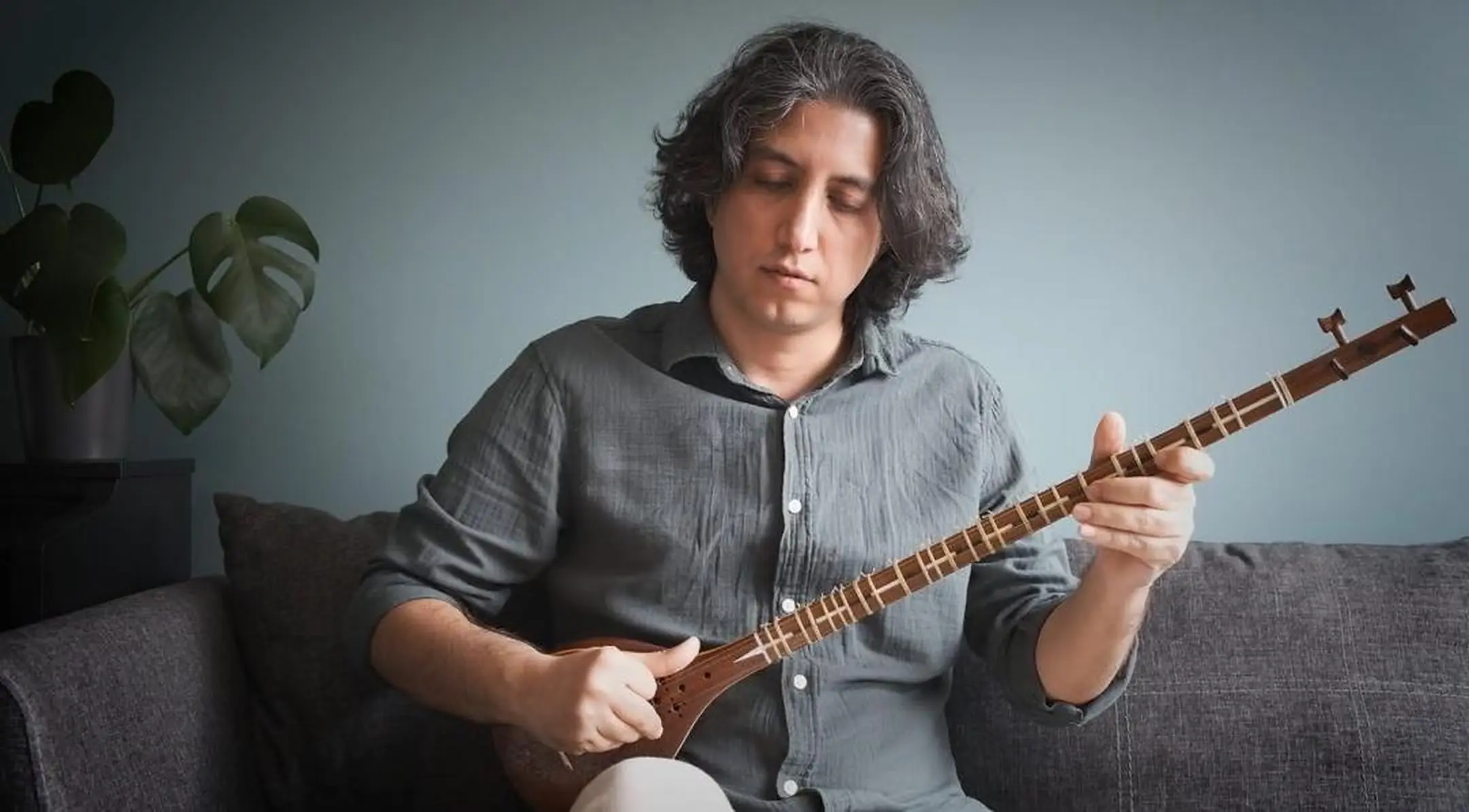
Setar is my central, long-term instrument; the tar is part of my practice alongside it.
I began studying Iranian classical music in 1996. Over nearly thirty years since then, the setar has been my central instrument, and I also perform on the tar. My playing is grounded in the radif — the core repertoire of Iranian classical music — together with improvisation, phrasing, and ensemble practice.
I founded and led the Saba Setar Ensemble (Hamnavazan-e Saba), which performed in Tehran and other Iranian cities, and I collaborated for many years with the Hamsaz Ensemble under the setar master Massoud Shaari. I have also taken part in the Fajr Music Festival and in independent performances, and I hold Grade-One Professional Membership of the Iran Music House.
Teaching has been central to my work for more than twenty years. I founded and directed the Sarang Music School in Tehran for about five years, and I continue to teach setar, tar, radif, and repertoire. My approach follows the way I learned: careful listening, repetition, and gradual correction between teacher and student.
My research grows directly out of this practice. Alongside music, I work as a software developer, and that background helps me think about how musical evidence can be organised and documented. In my research it remains a supporting tool: the interpretation of the music stays with experienced musicians.
A brief chronology
- 1996
Began studying Iranian classical music
The start of a lasting engagement with the setar and the radif.
- 2001
Study and collaboration with Massoud Shaari
The beginning of long-term study, and later ensemble work together.
- 2007
Second Prize in setar performance
Iran National Festival of Young Music.
- 2009
B.Sc. in Electrical and Electronics Engineering
Islamic Azad University.
- 2011
Ghoroub / Sunset released
An album by Massoud Shaari; I performed as a setar player and ensemble musician.
- 2021
M.A. completed and Dar Baharan released
M.A. in Iranian Music Performance, University of Art, Tehran; the album Dar Baharan published the same year.
Musical formation
My training combines long-term study with leading musicians, formal university instruction, and shorter masterclasses. The depth of study differs across these relationships.
Long-term study and collaboration
Sustained study, and in some cases years of working together.
- Mohammad-Reza Lotfi — long-term study at the Mirza Abdollah School, including the complete Iranian radif and advanced performance practice.
- Massoud Shaari — long-term study and artistic collaboration since 2001: setar, interpretation of the radif, and ensemble performance; practical supervisor of my M.A. thesis.
- Dariush Pirniakan — study of the advanced tar radif of Ali-Akbar Shahnazi.
University instruction
Coursework during my M.A. studies.
- Babak Khazraii — analysis of the Iranian radif and academic research methodology.
- Houman Asadi — analysis of the Iranian radif.
- Sasan Fatemi — historical Persian music theory and premodern compositional and rhythmic-cycle systems.
- Mohammad-Ali Kiani-Nejad — ensemble performance and creative practice.
Masterclasses and short courses
Shorter periods of study.
- Hossein Alizadeh
- Dariush Talai
- Keyvan Saket
- Behdad Babaii
Music, research, and software
I work professionally as a full-stack software developer on database-driven web applications. This experience informs how I approach structured documentation and knowledge representation in my research, but it stays in a supporting role. My public identity, and the centre of this website, is music: performance, teaching, and the study of the radif.